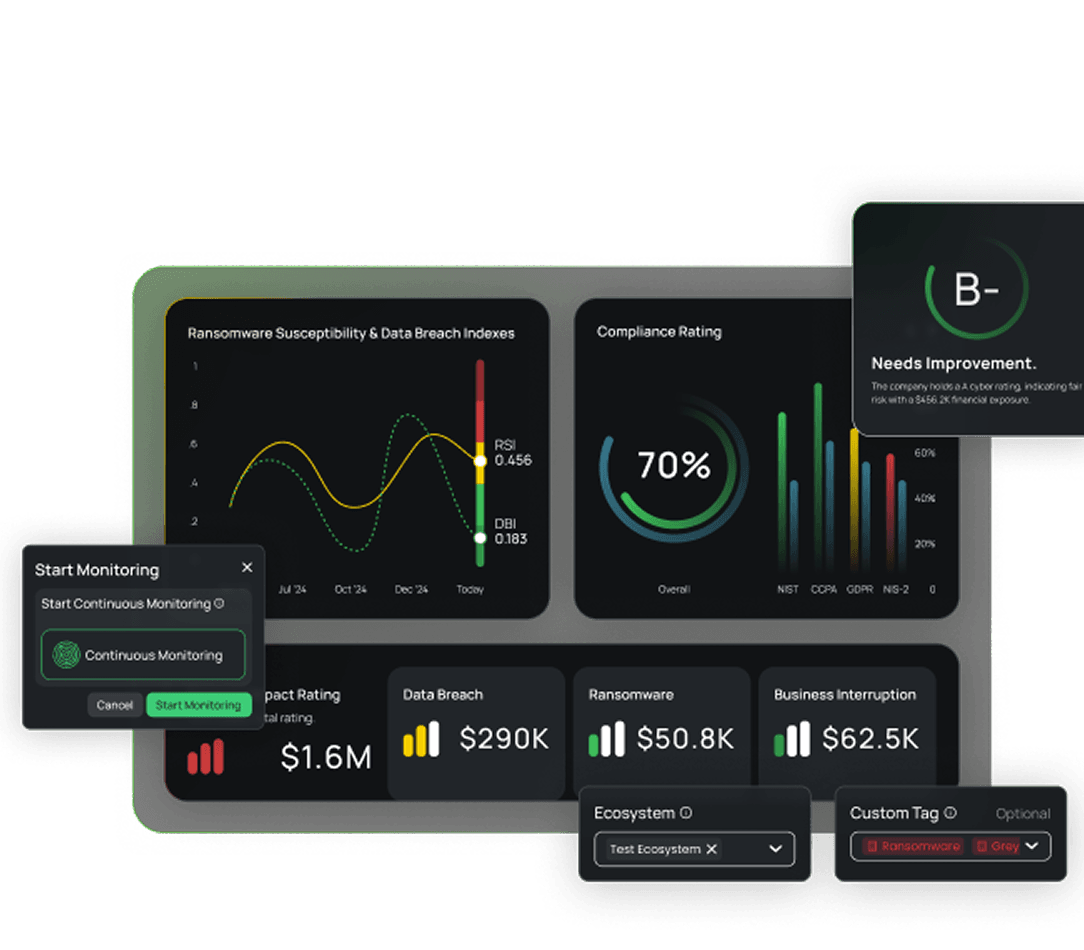
Point-in-Time Assessments Miss Real Risk
Annual questionnaires and periodic reviews become outdated quickly and fail to reflect how risk changes between assessments.

Third party risk management (TPRM) solutions give leaders a way to understand, govern, and act on risk introduced by their vendors and suppliers. Black Kite helps organizations move beyond point-in-time scores and annual reviews toward ongoing risk visibility and collaborative remediation.
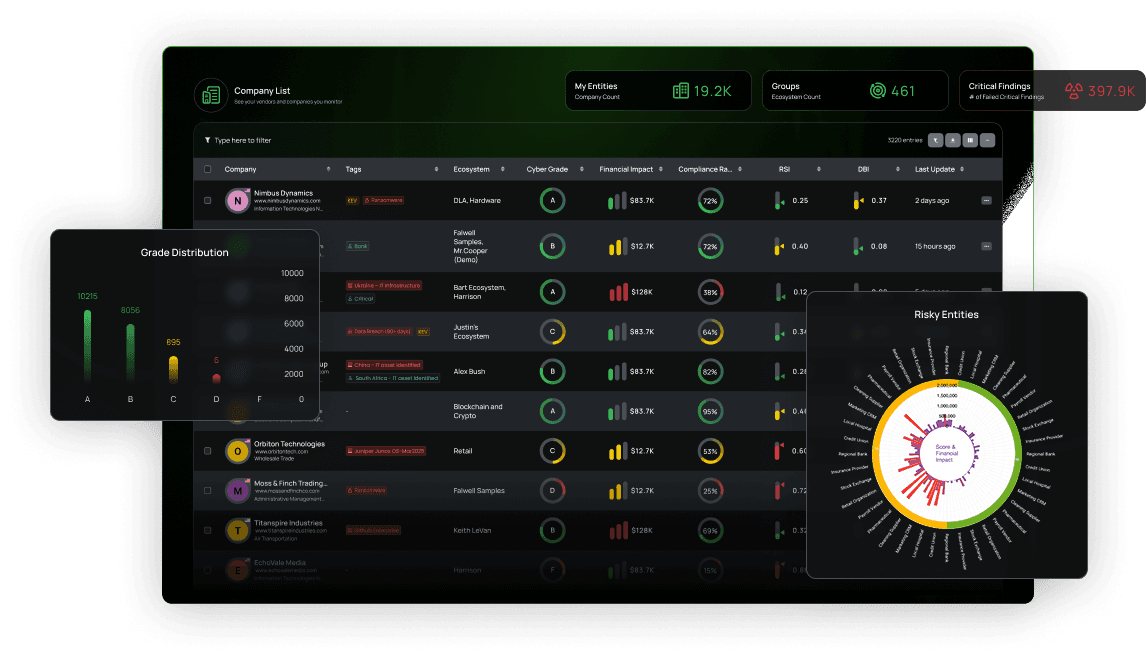
Every organization depends on vendors, suppliers, and external partners to operate. When one of them is breached, the impact does not stay contained. Disruptions spread across ecosystems, expose sensitive data, and create real operational, financial and reputational consequences.
Most third party risk programs were built around questionnaires, annual reviews, and blackbox scores that nobody can fully explain. When cyber risk moves faster than your assessment cycle, that approach leaves organizations exposed.
As third-party ecosystems grow more complex and threats become more dynamic, traditional third-party risk solutions fall short.
Strong third party risk management solutions deliver deeper intelligence and a broader set of use cases that enhance an organizations’ ability to continuously manage risk across the extended supply chain.
Gain real-time visibility into the cybersecurity risk posture across hundreds of thousands of vendors, suppliers, and partners. Risk is monitored continuously, ensuring exposure is identified as it emerges across the entire extended supply chain.
Understand exactly what’s driving risk with full transparency into cyber ratings, aligned to standards that CISOs and security practitioners already know and trust so you can confidently guide vendors on specific remediation actions.
Go beyond the tip of the iceberg with access to deeper third-party risk intelligence, including active threat exposure, threat actor targeting, the financial impact of cyber risk, and ransomware susceptibility.
Black Kite's Ransomware Susceptibility Index® (RSI™) predicts the likelihood of a vendor being hit by ransomware before an attack occurs, giving teams an early warning signal that point-in-time scores cannot provide.
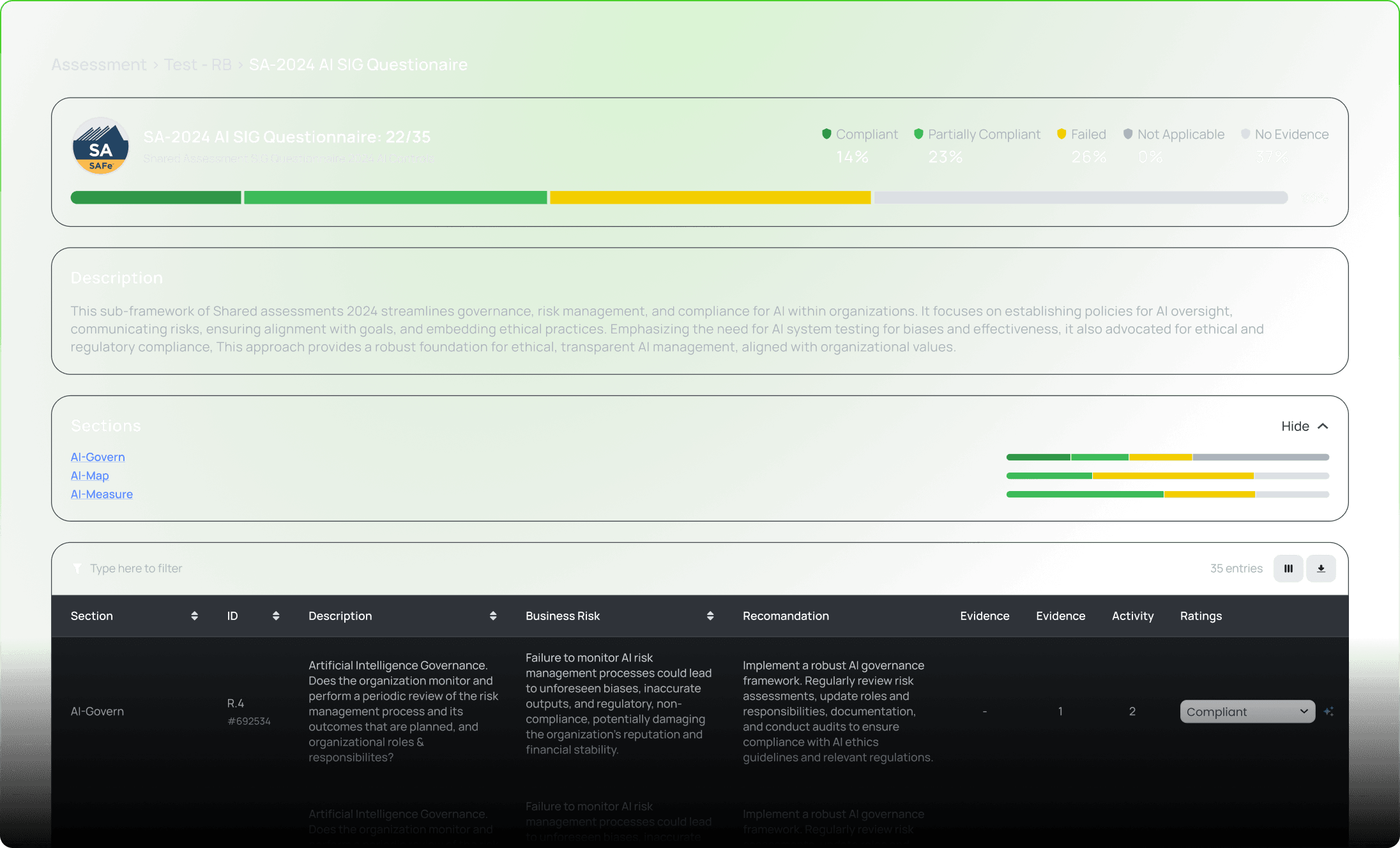
Replace manual questionnaires with an intelligence-first, questions last approach. Baseline a vendor's security posture using continuous monitoring data, use AI to analyze vendor documentation and map controls to industry frameworks and custom questionnaires, engaging vendors only on the identified gaps.
Third-party risk does not stop at direct vendors. Modern enterprises operate within interconnected ecosystems where suppliers, service providers, and shared platforms create overlapping dependencies. When one vendor is compromised, the impact does not remain isolated. It extends across the broader supply chain.
Effective TPRM programs require visibility beyond direct third parties.
Third-party risk is not uniform. Treating all vendors the same creates blind spots.
Different vendor categories introduce distinct forms of exposure:
Each category carries a different impact profile. Effective TPRM accounts for these differences instead of collapsing them into a single score or relying on a one-size-fits-all questionnaire.
Third parties rarely operate in isolation. Many depend on the same cloud platforms, software vendors, telecommunications providers, or regional infrastructure. These shared dependencies concentrate exposure across your ecosystem.
When a single provider experiences disruption:
Concentration risk compounds because one failure touches many relationships at the same time. Vendor-by-vendor reviews do not reveal this shared exposure.
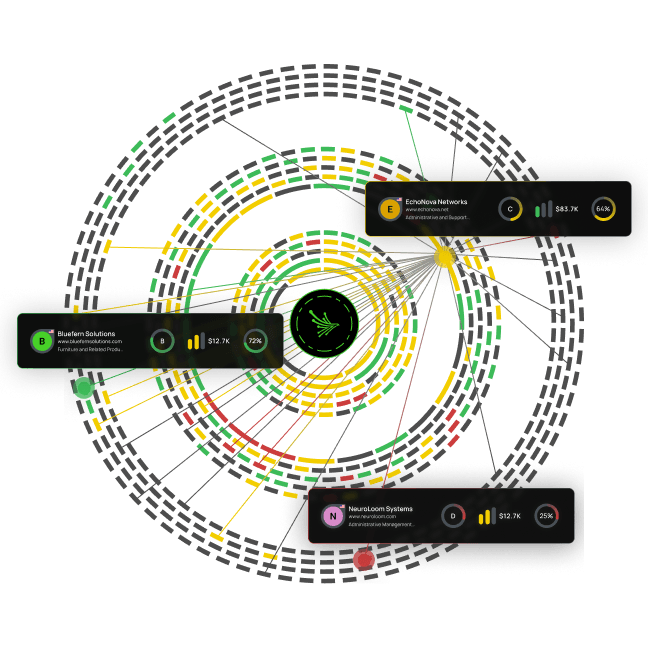
Risk does not stop with your direct vendors. Third parties rely on their own suppliers and infrastructure partners. These layered relationships create cascading exposure across the ecosystem, where one failure propagates through multiple tiers of dependency.
Nth-party risk introduces:
Without insight into broader supply chain dependencies , organizations misjudge their true risk footprint and overestimate resilience.
Black Kite was built for ecosystem-scale visibility, extending insight beyond direct vendors to account for cascading risk from deep dependency chains.
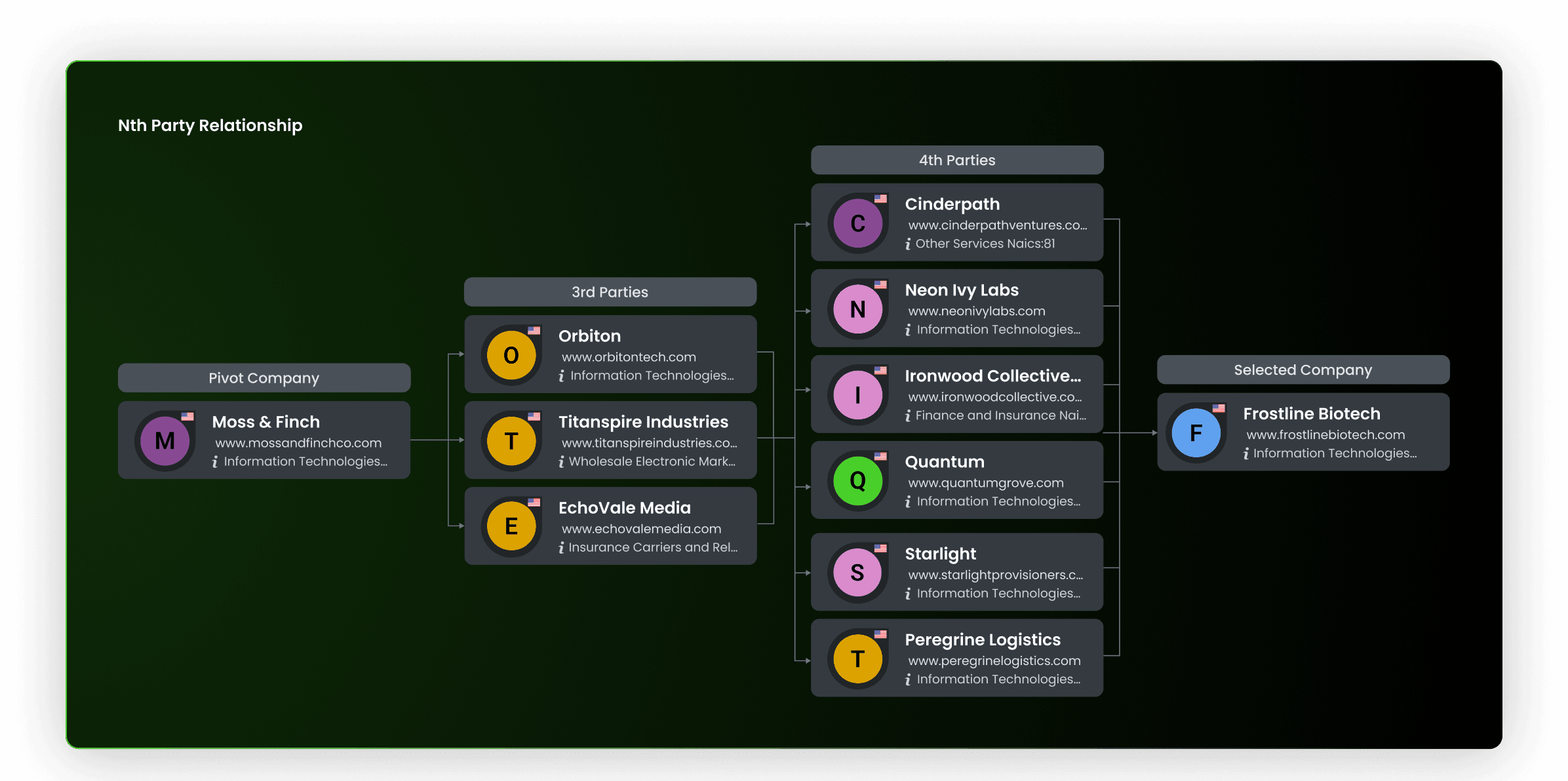
Black Kite is designed for enterprise-scale third-party ecosystems where manual processes break down. Instead of relying on point-in-time ratings, questionnaires and self-attestation questionnaires, organizations gain continuous intelligence that strengthens oversight, improves prioritization, and supports confident risk decisions at scale.
If current discussions feel reactive, fragmented, or difficult to defend, the approach to 3rd-party risk management needs to mature.
Third party risk is shaped by regulatory pressure, data sensitivity, and operational dependencies, all of which vary significantly by industry.
Third-party disruptions rarely provide advance notice. Organizations that manage risk continuously are better prepared to absorb failure, limit impact, and protect the business.