The Canvas Breach Was More Than an EdTech Problem. It Was a Concentration Risk Problem.
275 million individuals. Nearly 9,000 institutions. One ransom paid. And a lesson that applies to every industry.
Published
May 13, 2026
Authors
Introduction
The Instructure/Canvas breach closed last week. It is now confirmed as the largest educational data breach on record. But the breach itself (the mechanics of how ShinyHunters got in, how much data they took, how Instructure responded) is not actually the story security leaders should be focused on.
The story is what it reveals about what can happen when vendor ecosystems fail.
What Happened
This incident did not appear out of nowhere.
In October 2025, seven months before the breach made headlines, Scattered Lapsus$ Hunters published claims tied to Canvas-related data, alleging over 2.3 million exposed records including names, addresses, and employee information. The claims went largely unaddressed. Attacker interest in this platform was already documented. The exposure window was already open.
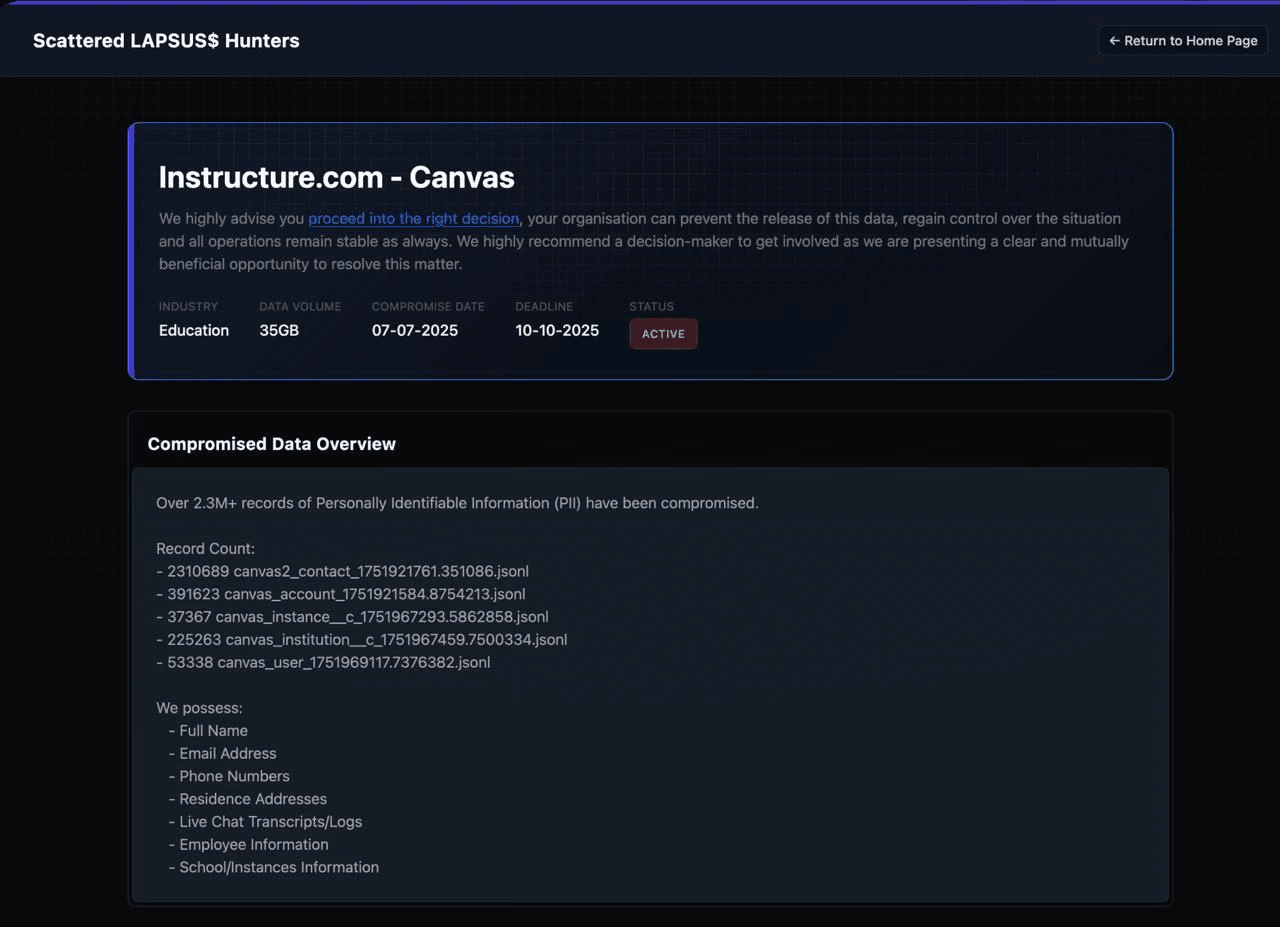
The Scattered LAPSUS$ Hunters post from October 2025 claimed over 2.3 million records of PII compromised from Instructure/Canvas, seven months before the breach made headlines.
That context matters, because it means the May 2026 escalation was not a bolt from the blue. It was a platform with a known attacker history, at enormous scale, that went largely unremediated for seven months.
By May 2026, the situation escalated fast.
- May 3: ShinyHunters claimed nearly 9,000 schools affected globally and alleged exposure of 275 million individuals (students, teachers, and staff), including private messages and Salesforce-related data.
- May 5: The group published a list of affected schools and began applying pressure not just on Instructure, but on the institutions depending on Canvas.
- May 11: Instructure confirmed it paid a ransom, stated that data had been returned with digital confirmation of destruction, and apologized publicly for falling short on communication.
- May 13: ShinyHunters issued a public statement (leaked on May 12) confirming the matter resolved, stating that impacted institutions would not be further targeted and that the compromised data is “nonexistent.”
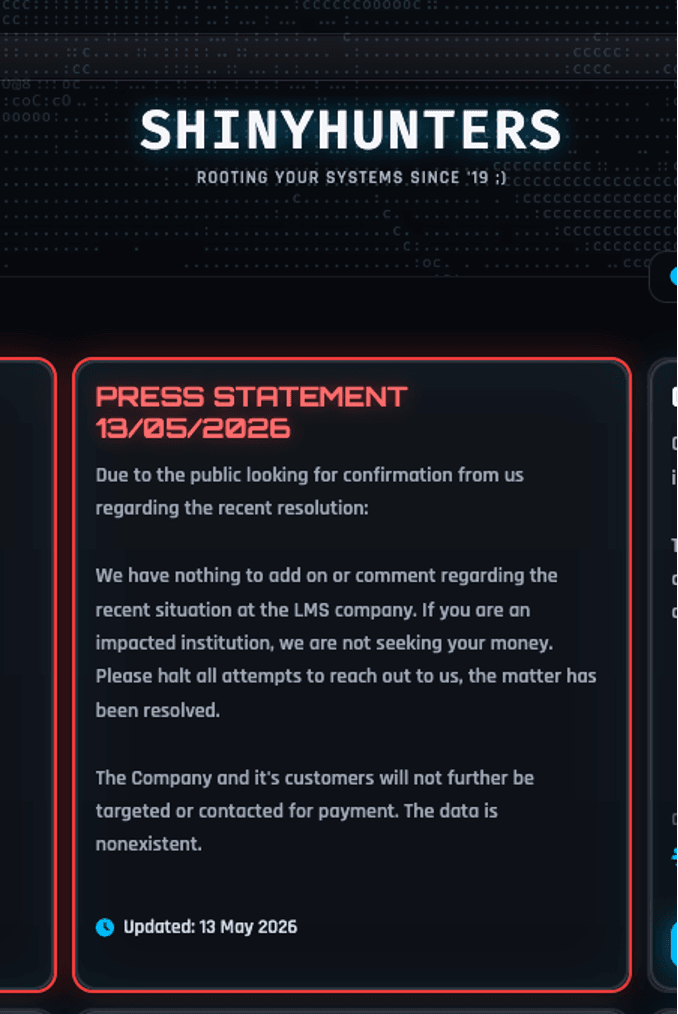
ShinyHunters' May 13 press statement confirmed the matter resolved and stated that compromised data is 'nonexistent,' closing the incident but not the questions it raised.
That May 5 escalation is worth pausing on. This stopped being a vendor breach and became ecosystem extortion with attackers leveraging the scale of Canvas's reach to pressure thousands of dependent organizations simultaneously. The platform's market penetration, which is an asset in normal times, became the attack surface.
The Real Issue: One Vendor, Everywhere
Canvas doesn't serve one institution. It serves 41% of U.S. higher education, plus K-12 systems, plus schools and universities across the globe.
That's not a vendor relationship. That's infrastructure-level concentration.
When a single platform reaches that level of market penetration, standard vendor risk management frameworks start to break down. A questionnaire tells you how that vendor manages risk. It doesn't tell you how many of your peers go down with you if that vendor has a bad week.
That's concentration risk. And it is not just an EdTech problem.
It's a manufacturing problem, when a single ERP vendor serves 60% of an industry's tier-one suppliers. It's a financial services problem, when critical middleware touches every major clearing institution. It's a healthcare problem, when one claims processor handles billing for half the hospitals in a region.
Canvas just made it visible. Loudly.
The Question Every Security Leader Should Be Asking Right Now
"Which of our vendors is our ‘Canvas’?"
Not just which vendors do we rely on, but which vendors does our entire industry rely on? Which platforms, if compromised, create cascading exposure not just internally, but for customers, partners, and organizations sharing the same infrastructure?
Most TPCRM programs are built to evaluate vendors one at a time. Questionnaire by questionnaire. Assessment by assessment. That model works well for managing individual vendor relationships.
It does not surface concentration risk. That requires looking at the whole ecosystem at once.
The right time to understand that exposure is before an incident, not during one.
What Black Kite Saw
Incidents like this rarely appear without warning. The Canvas breach was no exception.
The October 2025 post from Scattered Lapsus$ Hunters was not just noise. It was attacker activity around a high-concentration platform, the kind of signal that, combined with Ransomware Susceptibility Index® (RSI™) trend data, tells a more complete story than any single metric can.
As shown in the chart below, Instructure's ransomware susceptibility profile was already trending in the wrong direction before the October event. That doesn't mean the RSI™ predicted the breach. It means the conditions for one were visibly developing, and security teams with access to that data had the context to act.
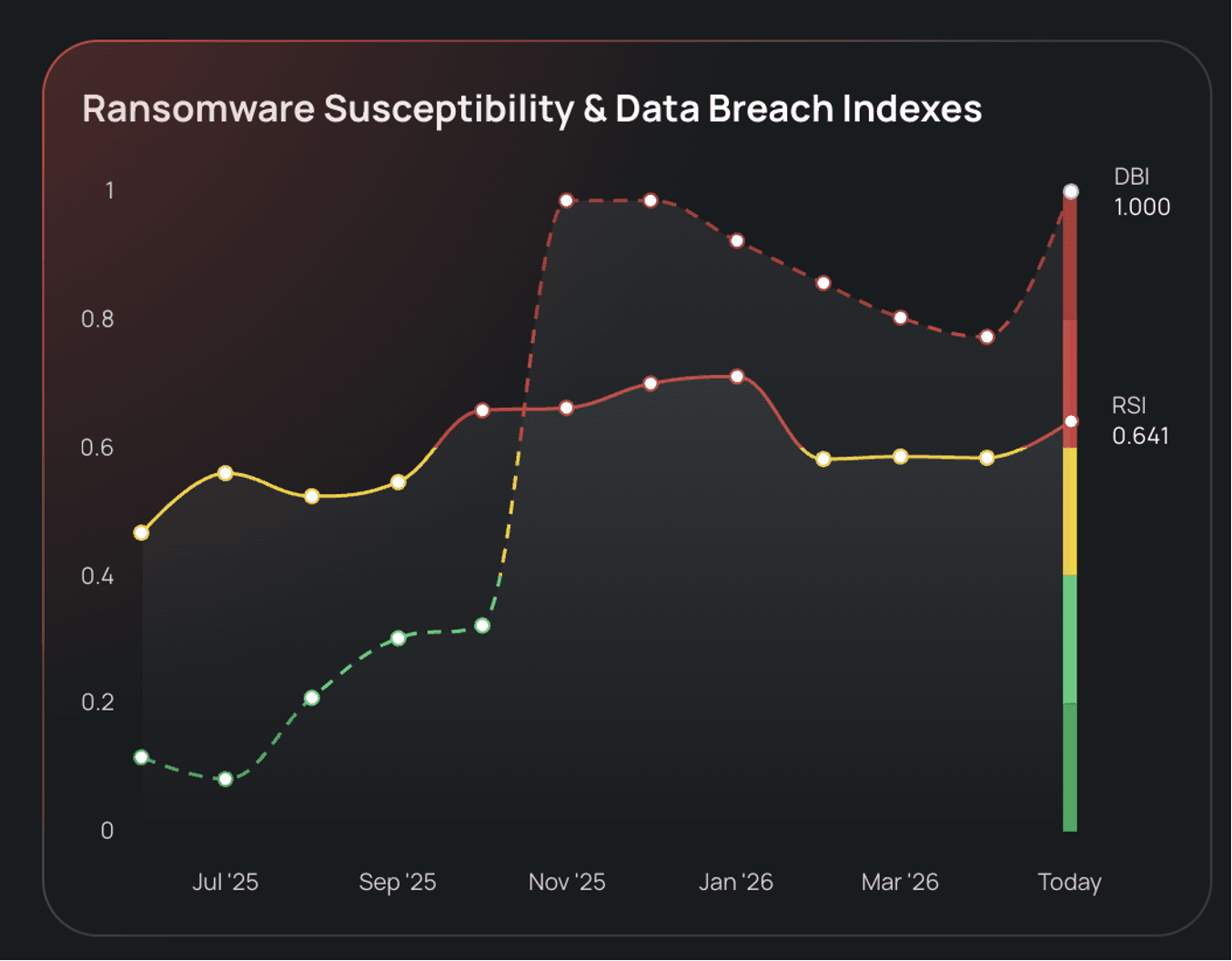
Instructure’s Ransomware Susceptibility Index® (RSI™) trend data shows an increased likelihood of an attack starting in October 2025.
No single signal tells the whole story. But early attacker activity, susceptibility trends, and ecosystem dependency data — viewed together — give security teams something far more actionable than any one data point in isolation.
That matters because concentration risk is not only something organizations should understand after an incident. With the right intelligence, it can be monitored before an incident becomes a crisis.
For security teams using Black Kite's ecosystem-level exposure mapping, Canvas was already a flagged concentration risk, not a surprise surfaced by a news alert.
What Black Kite Did
Black Kite’s response happened in two stages.
The first FocusTag® related to the initial attack was created on October 3, when Scattered Lapsus$ Hunters first published claims tied to Canvas-related data.
The situation escalated again on May 3, when ransomware activity was identified for Instructure. Two days later, on May 5, the threat actor published a list of affected schools and organizations.
Black Kite quickly analyzed that list and, on May 8, published a separate FocusTag® covering the nearly 9,000 affected entities.
The May 8 FocusTag® mapped the schools and organizations identified in the threat actor’s list to entities monitored in Black Kite customer ecosystems. This turned a global breach headline into a portfolio-specific exposure view: customers could quickly see whether any monitored entity in their ecosystem was connected to the incident and prioritize response accordingly.
A headline tells you something happened. A FocusTag® tells you whether it matters to your ecosystem.
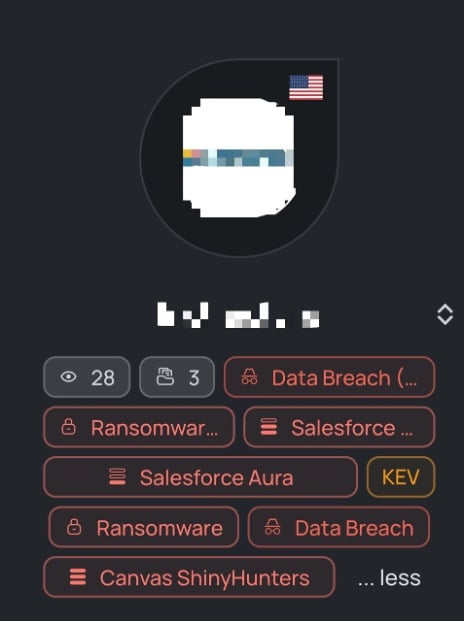
Example of a Canvas/ShinyHunters FocusTag® applied to a monitored entity that appeared in the threat actor’s affected-school list.
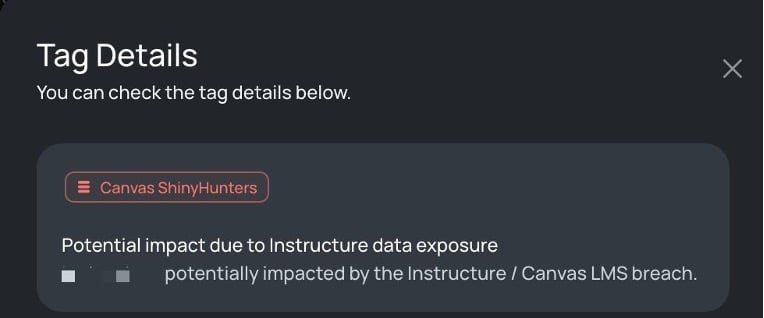
FocusTag® details surface how a tagged vendor is impacted, which can be shared directly with the vendor.
Concentration Risk Is a Third-Party Ecosystem Problem
Ransom payments are recoverable. Transparency failures are expensive. Discovering your concentration risk during a breach is avoidable.
The Canvas incident will generate vendor review cycles in education. But the smarter move for security leaders in any industry is to run that review now, proactively, before a breach forces the conversation.
That means mapping your vendor ecosystem not just for individual risk profiles, but for systemic overlap. It means asking which vendors sit at the center of your industry's web, not just your own. And it means having the intelligence infrastructure to flag that exposure before it becomes a crisis communication problem.
FocusTag® capabilities give security teams exactly that: a bridge between a global threat event and the specific vendors in your ecosystem carrying that exposure. Not after the fact. Before.
What's Next
The ransom payment was confirmed May 11. Regulatory and legal scrutiny of Instructure's transparency timeline is likely to follow. Vendor due diligence requirements will tighten across industries as procurement and legal teams absorb the implications of a single-vendor breach at this scale.
For security leaders, the actionable question isn't how could this have happened in education. It's: do we know where our Canvas is?
If the answer isn't an immediate yes, that's where to start.
Do you know where your concentration risk lives? See how Black Kite maps your vendor ecosystem.